
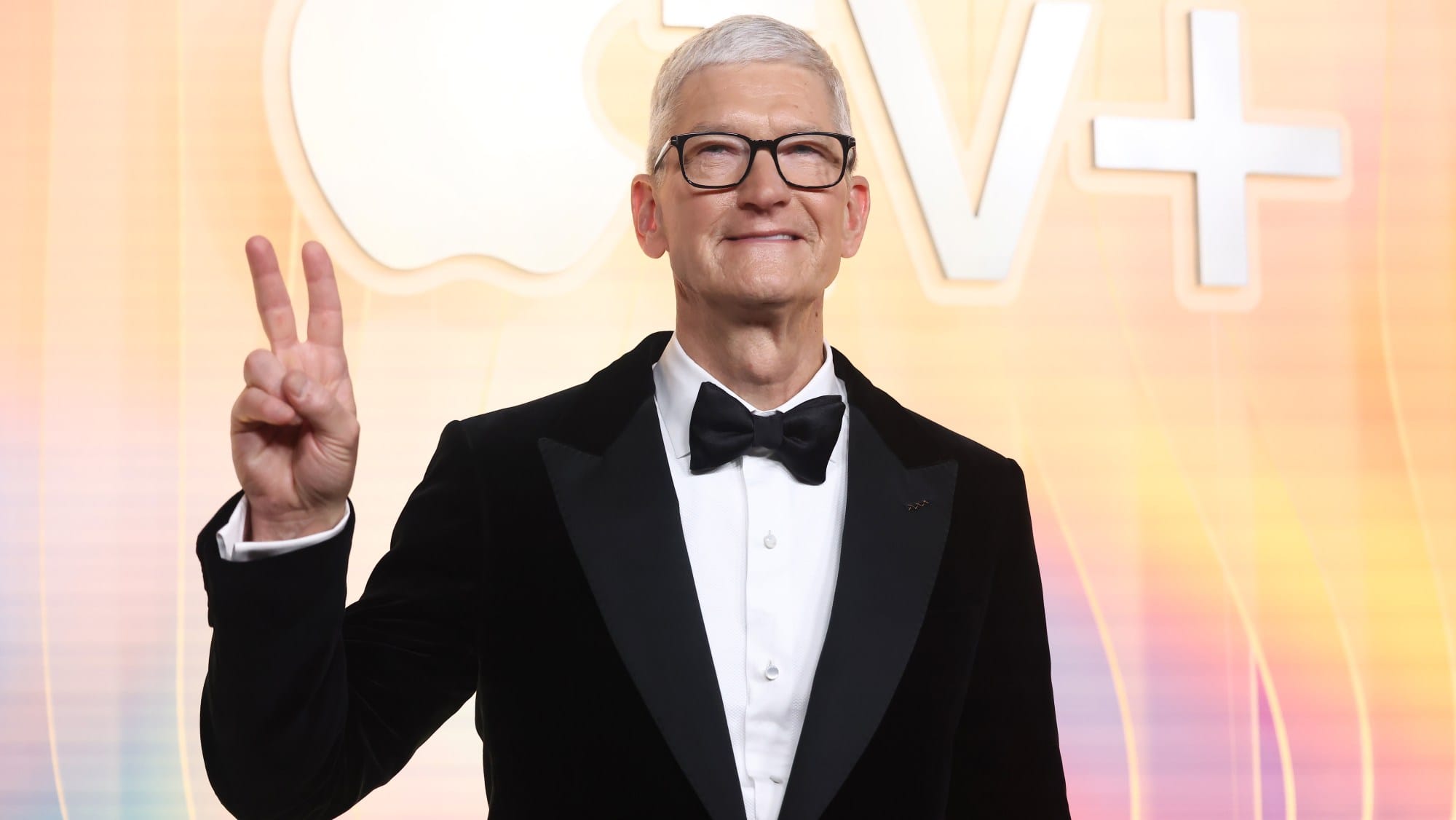
The End of the Cook Era
After 14 years steering Apple through its most profitable chapter in history, Tim Cook is stepping down as CEO effective September 1, 2026. John Ternus — Apple's senior vice president of hardware engineering and a 25-year company veteran — will take over as chief executive. Cook isn't disappearing; he'll transition into the role of executive chairman, where he'll focus largely on policy engagement and board-level oversight.
This isn't a surprise resignation or a boardroom crisis. Apple framed the transition as the result of a deliberate, long-term succession process — the kind of careful choreography you'd expect from a company that spent years watching Steve Jobs's abrupt departure reshape its identity. The announcement came late Monday, giving markets and insiders time to digest it before a full trading day.
Cook, now 65, leaves behind an Apple almost unrecognizable from the one he inherited. Under his watch, the company grew from roughly $350 billion in market cap to consistently flirting with $3 trillion, built out services into a multi-hundred-billion-dollar revenue stream, and navigated supply chain complexity that no other consumer hardware company comes close to matching.
It has been the greatest privilege of my life to be the CEO of Apple and to have been trusted to lead such an extraordinary company.
— Tim Cook, Apple announcement
- For all that success, Cook's tenure was defined less by invention and more by execution — scaling, optimizing, and monetizing the foundation Jobs built. That's not a criticism; it's arguably the harder job. But it does raise the central question now facing Ternus: what does Apple actually build next?
Who Is John Ternus?
If you follow Apple hardware closely, Ternus isn't a stranger. He's been the face of Apple's chip strategy, the M-series silicon push that severed the company's decades-long dependence on Intel and gave the Mac its most significant performance leap in a generation. He also oversaw the return of the redesigned MacBook Pro lineup and shepherded Apple Silicon across the entire product portfolio faster than most analysts expected.
His engineering background is significant. Apple under Cook became, fairly or not, known for incremental hardware updates and a pricing strategy that pushed boundaries. Ternus brings credibility with the engineering and developer communities in a way that few executives at Apple's level currently do. His statement at the announcement was characteristically understated:
I am humbled to step into this role, and I promise to lead with the values and vision that have come to define this special place for half a century.
— John Ternus, incoming Apple CEO
Separately, Johny Srouji — the architect of Apple's silicon dominance — will immediately step into Ternus's former role as chief hardware officer. That's a smart move. Srouji's fingerprints are on every Apple chip since the A7, and keeping him embedded in hardware leadership preserves continuity where Apple's competitive advantage is sharpest.
Arthur Levinson, who has served as non-executive board chairman for 15 years, will shift to lead independent director when Ternus joins the board on September 1.
Why This Transition Matters Beyond Apple
Cook's replacement with a hardware-first executive sends a clear signal about Apple's strategic priorities heading into the next decade. This isn't a pivot to a software or services-led CEO — it's a bet that the physical product, the device, the chip, remains Apple's irreplaceable moat.
That matters enormously in the current AI landscape. Every major tech company is racing to control AI at the infrastructure layer. Google has TPUs. Microsoft is leaning into Azure and custom silicon. Amazon has Trainium and Inferentia. Apple's play, increasingly, is on-device AI powered by its own silicon — a privacy and performance argument that only works if the hardware is best-in-class. Ternus is precisely the person to prosecute that strategy.
This puts pressure on Qualcomm in particular, which has been aggressively marketing its Snapdragon X chips as the PC industry's answer to Apple Silicon. A Ternus-led Apple is unlikely to slow its silicon cadence — if anything, expect more aggressive timelines and potentially a broader push into categories Apple has circled but not committed to, like smart glasses or next-generation wearables.
- For developers, the transition also signals something important: the technical credibility at the top of Apple's leadership has increased. Ternus speaks the language of engineers. Whether that translates into more developer-friendly policies — on the App Store, on sideloading, on AI API access — remains to be seen. But the cultural signal is real.
What This Means
The Cook-to-Ternus handoff is one of the most significant leadership transitions in consumer technology since Satya Nadella replaced Steve Ballmer at Microsoft in 2014. And that comparison is instructive: Nadella, a technical leader, refocused Microsoft around cloud and developer tools, unlocking a decade of growth the Ballmer era couldn't find.
Ternus has a similar opening — and similar pressure.
- For developers: Expect continuity in Apple's platform approach short-term, but watch for signals at WWDC 2027 about whether Ternus pushes for more openness or doubles down on the walled garden. His engineering instincts could break either way.
- For founders and product teams: Apple's on-device AI ambitions become more credible with a hardware-native CEO. If you're building AI applications, the case for deep Apple Silicon optimization just got stronger.
- For investors: Cook as executive chairman is a stabilizing signal. He's not gone; he's positioned to handle the geopolitical and regulatory complexity — particularly U.S.-China supply chain tensions and ongoing EU antitrust scrutiny — that would otherwise land immediately on a new CEO's desk.
- For the broader industry: A hardware engineer running the world's most valuable company reframes the AI conversation. Intelligence at the edge, on your device, powered by proprietary silicon — that's Apple's thesis. Ternus is now responsible for proving it right.
The Cook era was about scale and discipline. The Ternus era will be judged on whether Apple can invent again at a moment when the entire industry is being restructured around artificial intelligence. The clock starts September 1.