Beijing Pulls the Plug on Meta's Biggest AI Agent Bet
Meta's most consequential AI acquisition of the past year just hit a wall—and the wall has a flag on it.
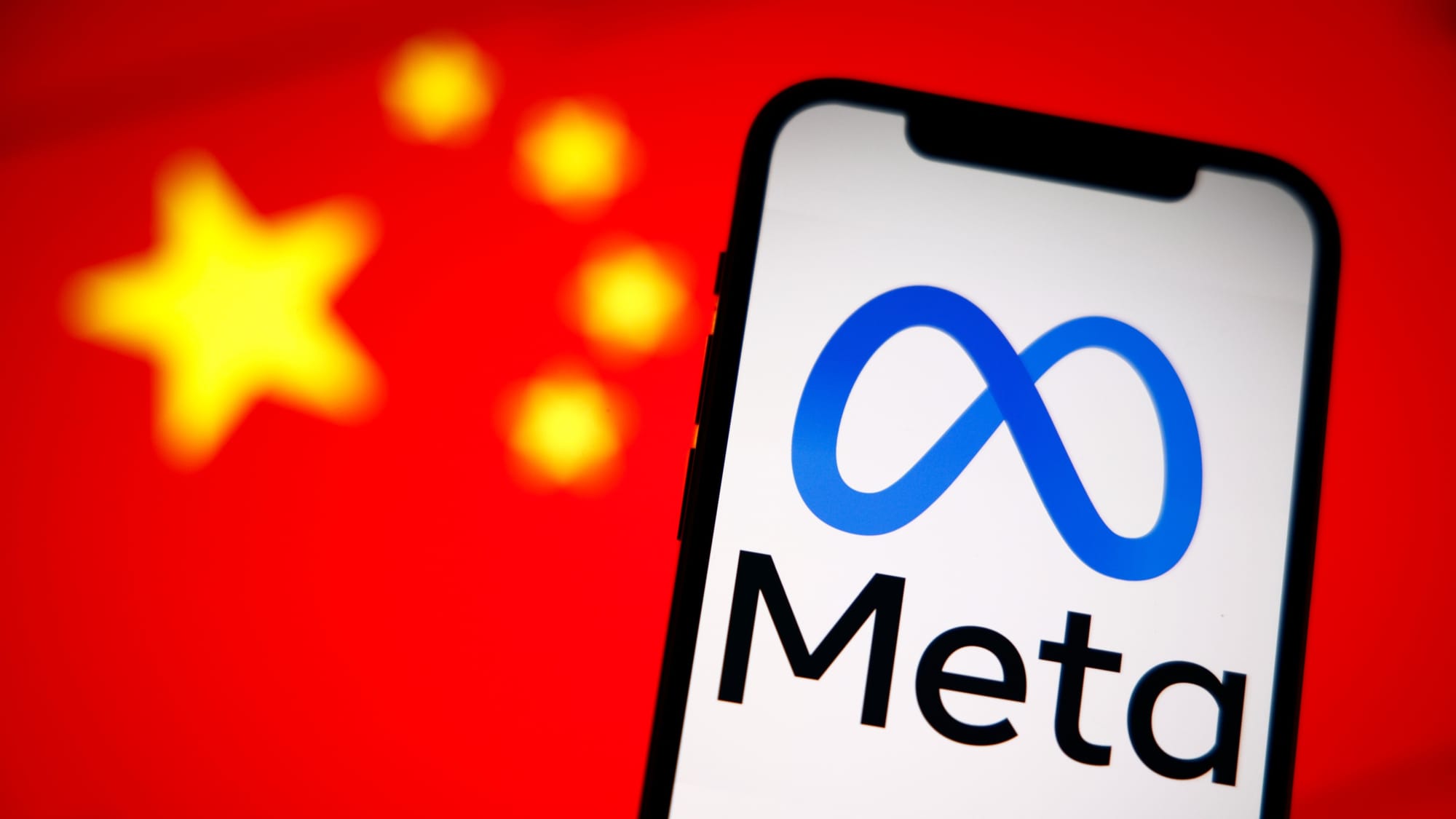
China's National Development and Reform Commission formally blocked Meta's roughly $2 billion purchase of Manus on April 27, ordering both parties to fully unwind a deal that had already closed, already relocated a hundred-person team into Meta's Singapore offices, and already been integrated into live Meta products including Ads Manager. No nuanced remedy, no conditions, no negotiated path forward. Just a hard stop.
The NDRC's statement offered no elaboration beyond citing unspecified "laws and regulations," which is Beijing's way of making the message loud without making it falsifiable. But the subtext is unmistakable: China will treat the acquisition of AI talent and technology as a matter of national interest—even when that talent already moved abroad.
Manus earned its reputation fast. The startup debuted its general-purpose AI agent in early 2025, showcasing a system that could autonomously browse real estate listings, book complex international travel, conduct research, and generate code—not as a single model trick but as a coordinated stack of specialized agents working in concert. The underlying engine relied on Anthropic's Claude 3.7 Sonnet, but the architecture on top—planner agents, executor agents, verification loops—was distinctly Manus's own. That technical credibility is precisely what attracted Mark Zuckerberg, who had staked his 2025 strategy on delivering what he called "personal superintelligence for everyone."
- For Meta, Manus was a shortcut into a competitive race it was visibly losing. OpenAI and Google had been shipping agentic products for months. Acquiring a team that had already solved core orchestration problems was faster than building from scratch—and folding Manus's technology into Meta AI and Ads Manager signaled the company was serious about agents as a product category, not just a research direction.

Now that shortcut is being dismantled. The practical challenge of unwinding a completed deal is considerable. Integration isn't a switch you flip in reverse. Sources familiar with the situation, cited by the Financial Times, say the most likely paths involve either spinning Manus off to a new buyer or selling equity back to its original investors—a list that includes Benchmark Capital, the top-tier US firm whose involvement had already attracted scrutiny from Senator John Cornyn in Washington. Neither path is clean, and neither resolves the central tension: Manus founders Xiao Hong and Yichao Ji remain under exit bans in mainland China, unable to leave while Chinese authorities retain leverage over the situation.
Meta's response has been notably measured, with a spokesperson stating only that the transaction was legally compliant and that the company expects "an appropriate resolution." That's corporate language for "we're not escalating." Whether that posture survives the pressure of actually unwinding integrated technology is a separate question.
The timing, which is impossible to ignore, places this decision directly ahead of an anticipated Xi-Trump summit. One person briefed on NDRC's thinking described the move to the Financial Times as "pretty harsh," adding that its real purpose is less about Manus specifically and more about sending "verbal warnings on similar deals" while accumulating leverage for higher-stakes diplomacy. In other words, Meta's acquisition is being used as a geopolitical bargaining chip. The company's $2 billion bet became someone else's negotiating asset.
This also lands in a broader context: Bloomberg reported last week that Beijing has quietly warned Chinese tech startups—including leading AI companies—not to accept US investment without explicit government approval, a policy reportedly triggered by the Manus deal itself. The implications for the venture ecosystem are severe. If Chinese-founded startups, even those that have relocated to Singapore or elsewhere, remain subject to Beijing's veto power, the effective addressable market for US investors narrows significantly. Benchmark's position in Manus is now a cautionary case study.
The pressure this creates extends in multiple directions. For OpenAI and Google, Meta's stumble in the agentic AI race is a tactical reprieve—Manus's integration into Meta products had been a credible competitive signal, and that signal is now scrambled. For Anthropic, whose Claude model powered Manus's underlying reasoning, the deal's collapse is a reminder that even indirect exposure to geopolitically sensitive partnerships carries risk. For the broader class of AI startups founded by Chinese engineers that have since relocated to Singapore, the UAE, or Europe, the message from Beijing is unambiguous: geography is not the same as jurisdiction.
What This Means
The Manus veto is not primarily a story about one acquisition. It is a preview of how the US-China AI rivalry will shape dealmaking, talent flows, and product strategy for the next several years.
- For developers: If you're building on agentic AI infrastructure with any Chinese-origin component in the supply chain—team, IP, or investors—expect geopolitical scrutiny to become a standard part of due diligence conversations.
- For founders: The Singapore relocation playbook, which was becoming a popular way to operate outside both US and Chinese regulatory reach, has just been tested and found porous. Butterfly Effect moved its headquarters, but Beijing still had a claim.
- For investors: Benchmark's position illustrates that US capital flowing into Chinese-linked AI companies is increasingly visible to both Washington and Beijing—and both governments are treating it as a lever. That bilateral exposure is hard to hedge.
- For Meta specifically: The company now has to unwind integrated technology under time pressure while two key Manus executives remain unable to leave China. The cost isn't just financial; it's the organizational momentum of an agent strategy that was finally starting to look coherent.
- For the broader industry: Beijing's move to require government approval for US investment in Chinese AI startups—apparently precipitated by this deal—could structurally fragment the global AI funding market. That's not a temporary friction. It's a new baseline.
The US and China are, as multiple observers have noted, the only two countries producing top-tier AI models at scale. When the world's two AI superpowers treat each other's investment as a security threat rather than a market signal, the technology itself becomes a geopolitical instrument. Manus is the clearest proof yet that the deal structures, funding relationships, and talent networks that built the AI industry are now being renegotiated—not in boardrooms, but in government offices in Beijing and Washington simultaneously.
Meta will survive this. The agentic AI race will continue. But the rules just changed, and everyone building at the frontier needs to understand what they're now playing under.