
SpaceX Is Done Waiting for NVIDIA
Elon Musk has a habit of building the thing he can't buy fast enough. He couldn't get enough rockets, so he built SpaceX. He couldn't get enough batteries, so Tesla built Gigafactories. Now he can't get enough chips — and his answer is a $119 billion semiconductor plant in Texas called Terafab.
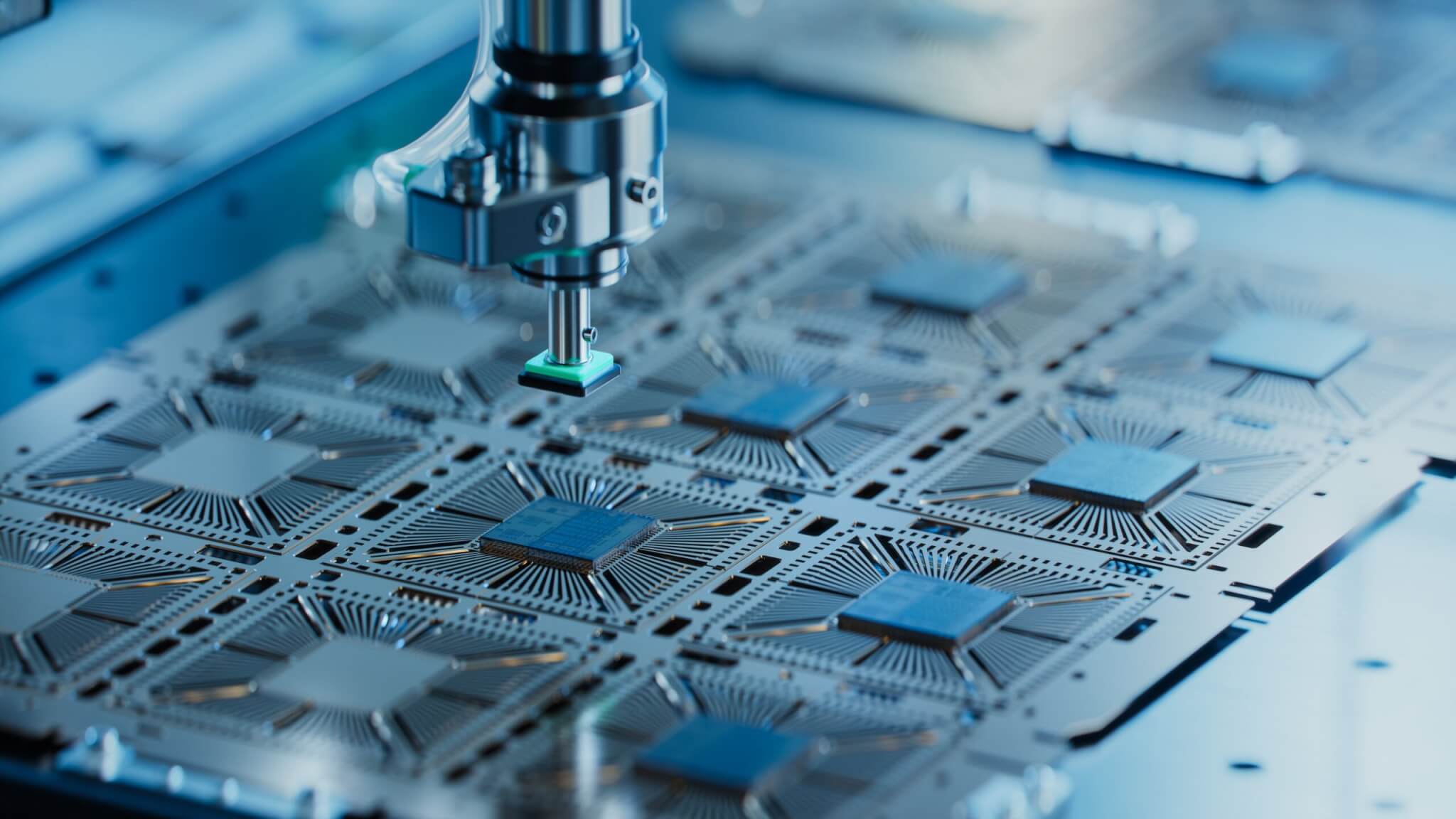
A public hearing notice filed in Grimes County, Texas reveals that SpaceX is seeking tax breaks for a facility with an initial investment of at least $55 billion, with total projected costs potentially reaching $119 billion across multiple build phases. The project is described in filings as a "multi-phase, next-generation, vertically integrated semiconductor manufacturing and advanced computing fabrication facility." That's corporate-filing language for: we want to make the entire stack ourselves.
The ambition here is staggering even by Musk standards. Terafab's stated goal is to produce chips capable of delivering one terawatt of compute per year — eventually. For context, a terawatt is roughly the combined power output of the entire United States electrical grid. Applied to AI compute, it's a number that makes even NVIDIA's most bullish roadmaps look conservative.
Why Musk Can't Just Buy His Way Out
The easy explanation for Terafab is that Musk is frustrated waiting in NVIDIA's chip queue. But the deeper logic is strategic and worth unpacking.
His AI company xAI — now formally folded into SpaceX in a combined entity reportedly valued at $1.25 trillion, with a rumored IPO expected as early as June — runs the Grok series of large language models. Training and serving frontier models requires consistent access to massive GPU clusters. Every founder and enterprise customer competing for that same compute is, by extension, a competitor for Musk's own AI ambitions.
The situation is roughly analogous to what Amazon did when it realized it was paying too much for third-party servers and built AWS. Musk is applying the same logic at a civilizational scale: if the chip supply chain is a bottleneck, own the chip supply chain.
We either build the Terafab or we don't have the chips, and we need the chips, so we build the Terafab.
— Elon Musk, via X
That's not rhetoric. It's a capital allocation thesis.
Intel's Role and the Tesla Connection
Notably, Terafab isn't a solo venture. Intel announced last month that it will help design and fabricate chips for the facility — a significant partnership that validates the project's technical credibility and gives Intel a lifeline of sorts as it fights to stay relevant against TSMC and Samsung in advanced chip manufacturing.
Tesla is also part of the equation, contributing resources and serving as a co-operator alongside SpaceX. The chips produced will serve a remarkably diverse set of use cases: AI model training and inference, autonomous Tesla vehicles, humanoid robots, and SpaceX's proposed orbital data centers — a concept Musk has explicitly cited as a primary reason for merging xAI and SpaceX under one roof.
SpaceX already operates the "Colossus" data center in Memphis, Tennessee, which recently inked a deal to power Anthropic's AI models — a competitor to xAI. That's a telling signal: Musk is building compute infrastructure that's valuable enough for rivals to buy, which means Terafab's output could become a revenue-generating asset independent of his own AI roadmap.
The Geopolitical Dimension
Terafab is also strategically timed against the broader push to reshore semiconductor manufacturing to the United States. The CHIPS Act already catalyzed investments from TSMC and Intel in Arizona and Ohio. A $55–119 billion privately funded chip facility in Texas — run by a company with deep defense and space contracts — is the kind of project that attracts both federal enthusiasm and scrutiny.
Grimes County is currently just one of several locations Musk has mentioned publicly, so the Texas filing may partly be a negotiating tactic for the best tax incentives. That's a standard playbook for gigaproject site selection, but the scale of the numbers being floated suggests the project is real, not a bluff.
This puts pressure on TSMC and Samsung to accelerate their own U.S. expansion timelines. If Terafab succeeds — even partially — it creates a vertically integrated American competitor that doesn't need to route production through Taiwan. Defense and intelligence clients alone would make that attractive.
What This Means
Terafab isn't just another data center announcement. It's a bet that owning the full compute stack — from silicon fabrication to orbital deployment — is the only durable moat in the AI era. Whether or not Musk hits his terawatt targets, the attempt reshapes the competitive landscape.
- For developers: If Terafab produces chips at scale, it could eventually diversify the GPU supply chain beyond NVIDIA, potentially driving down costs for AI compute. Don't expect that in the near term — this is a multi-decade infrastructure play.
- For founders: The vertical integration strategy Musk is pursuing means xAI could offer end-to-end AI infrastructure that no other competitor — not Google, not Amazon, not Microsoft — currently controls at the same level of ownership.
- For NVIDIA: The company isn't immediately threatened, but Terafab signals that its largest customers are looking for exits from dependency. That's a long-term pricing and market share risk worth watching.
- For Intel: The Terafab partnership is a meaningful vote of confidence in Intel Foundry Services at a moment when the company desperately needs design wins. It doesn't fix Intel's manufacturing yield problems overnight, but it buys credibility.
- For the broader AI industry: A privately funded, $100B-plus chip facility signals that AI infrastructure spending is moving beyond hyperscaler capex into an entirely new category — one where the infrastructure itself becomes a product, a moat, and potentially a public market story when that IPO lands.
The chips Musk says he needs today won't come from Terafab for years. But the factory is the long game — and if there's one thing the last decade of Musk ventures has demonstrated, it's that dismissing the long game is how you end up behind.