The Intelligence Community's Open Secret
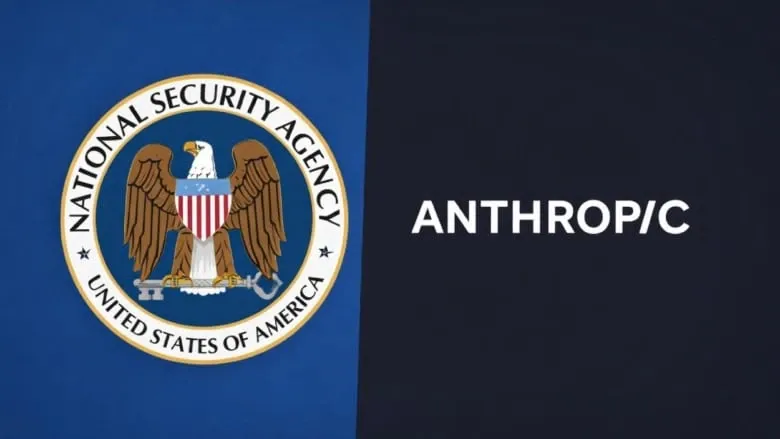
The U.S. government's relationship with Anthropic is, to put it generously, schizophrenic. On one hand, the Department of Defense has formally labeled Anthropic a "supply chain risk" and is actively arguing in court that the company's tools endanger national security. On the other hand, the National Security Agency—which sits directly under Pentagon authority—is quietly deploying Anthropic's most restricted model to hunt for exploitable vulnerabilities in digital infrastructure.
That contradiction isn't just awkward bureaucratic overlap. It reveals something important about how AI capability is reshaping institutional power: when a model is useful enough, even the agencies trying to block it can't stay away.
The model in question is Mythos Preview, a frontier AI system Anthropic announced earlier this month and immediately withheld from public release. The stated reason was stark: Mythos is allegedly so capable of executing offensive cyberattacks that broad deployment would be reckless. Anthropic capped access at roughly 40 vetted organizations under a program called Project Glasswing, publicly naming only about a dozen of them. According to reporting from Axios, the NSA is among the unnamed recipients.
What Mythos Actually Does (and Why That's the Point)
Anthropic has positioned Mythos squarely in the cybersecurity lane—a deliberate strategic choice that distinguishes it from Claude's general-purpose consumer identity. Using Mythos primarily for scanning environments to identify exploitable weaknesses is exactly the kind of defensive application Anthropic says it designed the system for. The UK's AI Security Institute has also confirmed access, signaling that allied intelligence communities are treating Mythos as serious infrastructure, not a research curiosity.
But the "too dangerous to release" framing has attracted skepticism from observers who note that capability restrictions can double as a convenient marketing lever. Scarcity signals power. If Anthropic says Mythos is too potent for the public but fine for the NSA, it simultaneously burnishes the model's reputation and curates a prestigious user base. That's not necessarily cynical—it may well be true that Mythos poses real dual-use risks—but the strategic upside of the positioning is hard to ignore.
The core tension here is that the Pentagon's lawsuit against Anthropic originated from a very specific demand: make Claude available for mass domestic surveillance and autonomous weapons development. Anthropic refused. That refusal is the actual flashpoint, not some vague concern about AI competence. The DoD's "supply chain risk" designation reads less like a security assessment and more like institutional retaliation from an agency that didn't get what it wanted.
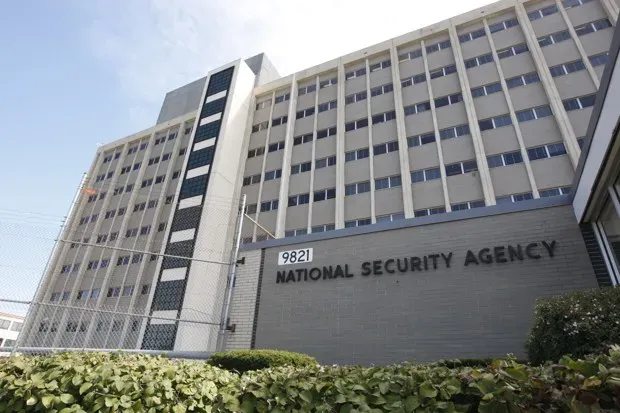
Meanwhile, the NSA—ostensibly bound by the same Pentagon authority driving that lawsuit—is running Mythos in production. Which raises an obvious question: does the left hand know what the right hand is doing, or does it simply not care?
The Thaw at the Top
Whatever the internal DoD politics, Anthropic's relationship with the Trump administration appears to be warming at the executive level. CEO Dario Amodei reportedly met last week with White House chief of staff Susie Wiles and Treasury Secretary Scott Bessent. The White House described the meeting as productive—vague enough to mean almost anything, but notable given the adversarial legal backdrop.
Reading between the lines, the most plausible interpretation is that Anthropic is trying to thread a needle: cooperate with government AI deployment at the intelligence and security layer, while holding firm on the specific applications—mass surveillance, autonomous lethal systems—that cross its stated ethical lines. That's a sophisticated and risky strategy. It requires convincing powerful institutions that "some use cases, not all" is a principled position rather than selective compliance.
For now, the NSA's quiet adoption of Mythos suggests that strategy may be working, at least partially. Getting the signals intelligence community onside—arguably the most technically sophisticated and operationally demanding government customer—is a stronger endorsement than any press release.
What This Means
The NSA-Mythos situation is more than an interesting contradiction to file under "government dysfunction." It has real implications for how the AI industry navigates state power going forward.
- For developers: The Anthropic model—maintain control over deployment, draw explicit red lines on applications, and negotiate access selectively—is becoming a template. Expect more frontier labs to experiment with tiered government access rather than blanket contracts or blanket refusals.
- For founders: The DoD's "supply chain risk" designation shows that federal retaliation for non-compliance is real. But the NSA's parallel adoption of Mythos suggests that capability beats politics when operational needs are acute enough. Build something genuinely useful and the leverage shifts.
- For the broader AI ecosystem: This puts pressure on OpenAI and Google, both of which have pursued deeper, less conditional integrations with the defense establishment. If Anthropic can win elite government deployments while refusing certain use cases, it challenges the assumption that full compliance is the only path to federal revenue. That changes the calculus for every lab currently deciding how close to get to the Pentagon.
- For the policy conversation: The spectacle of an agency arguing in court that a model is a national security threat while a sister agency deploys that same model operationally is going to be difficult to sustain legally. Either Mythos is dangerous enough to justify the lawsuit, or it isn't. Courts may eventually force the DoD to pick a lane—and that ruling could set precedent for how the government contracts with AI companies that push back on certain demands.
The deeper story isn't really about Anthropic or the NSA in isolation. It's about who gets to define what AI is "for" when the technology is powerful enough that everyone wants access, even those who publicly say they don't.
Anthropic bet that the answer is the company itself, not the customer. So far, that bet is holding.