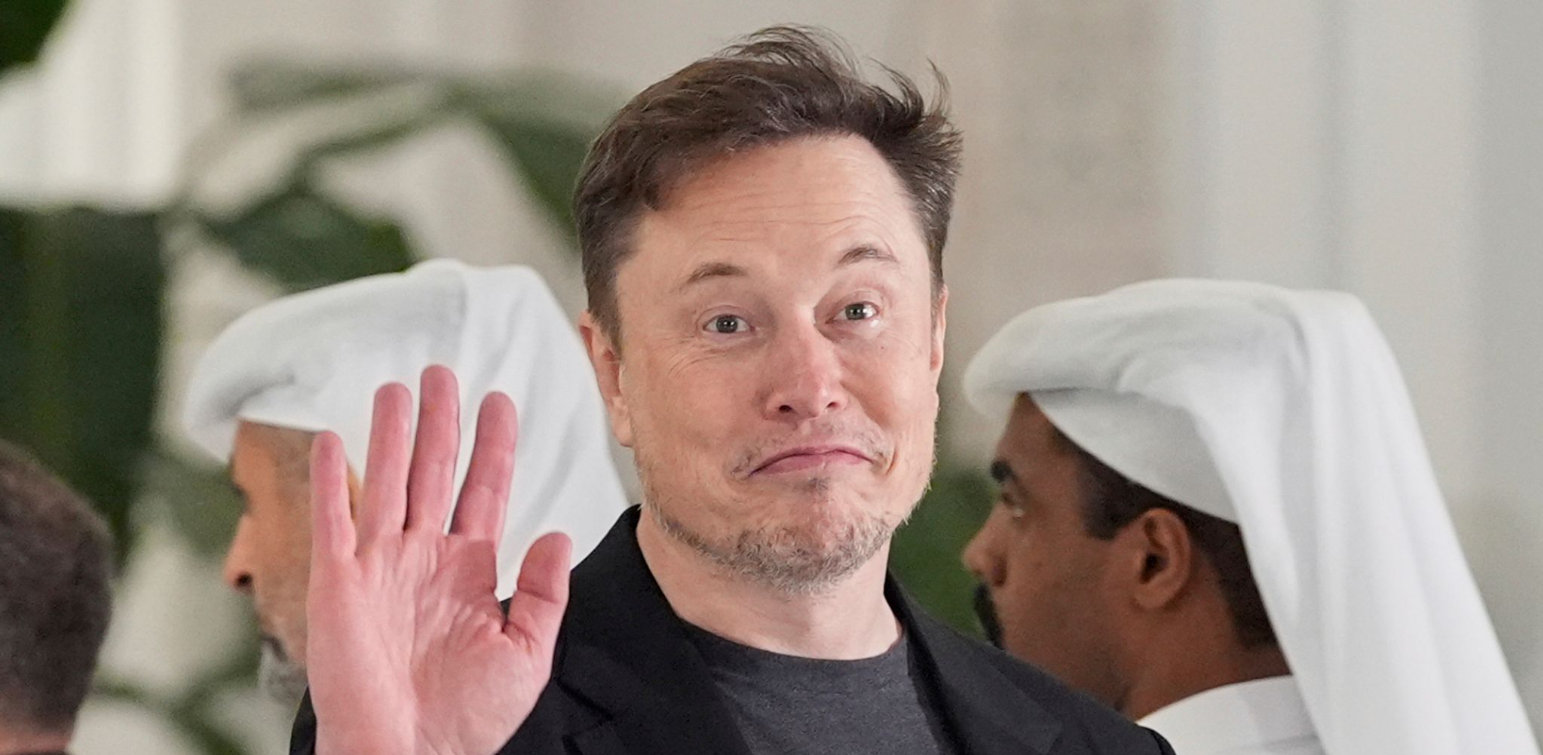
Elon Musk's ongoing legal war with OpenAI just got a dramatic reframe. In an amended complaint filed this week, Musk declared that any damages recovered from OpenAI and Microsoft—potentially exceeding $150 billion—should flow entirely to OpenAI's charitable nonprofit foundation rather than into his own pockets. His attorney Marc Toberoff was blunt about it: Musk "is not seeking a single dollar for himself," he told The Wall Street Journal.
On the surface, this reads like a principled stand. A billionaire, foregoing a nine-figure windfall in the name of charitable mission preservation. Look a little closer, though, and a different picture emerges.
The Legal Reality Behind the Altruistic Pivot
Federal Judge Yvonne Gonzalez Rogers had already started dismantling Musk's damages strategy before this amendment landed. Her order denied his request for punitive damages. She also rejected his expert witness's methodology for calculating disgorgement—the legal mechanism through which Musk argued OpenAI and Microsoft's gains, traced back to his original $38 million donation, could balloon to $134 billion. In plain terms: Musk's theory of why he should receive those damages wasn't holding up in court.
The amended filing looks less like a moral awakening and more like a legal necessity. By redirecting the damages to the nonprofit foundation and simultaneously demanding that Sam Altman and Greg Brockman surrender their equity and financial benefits to that same foundation, Musk sidesteps the personal-enrichment argument that was already failing. It keeps the lawsuit viable. It also, not incidentally, makes Musk look like the selfless guardian of AI's original charitable promise rather than a competitor trying to hobble a $852 billion rival.
Toberoff framed the move as setting the record straight against "OpenAI's spin doctors." OpenAI, for its part, has called the entire litigation "a harassment campaign driven by ego, jealousy and a desire to slow down a competitor"—and has asked the attorneys general of both Delaware and California to investigate Musk's conduct.

There is a genuine legal and ethical question buried under all this maneuvering, however. OpenAI was founded as a nonprofit with an explicit charitable mission. It subsequently built a capped-profit subsidiary, attracted billions in investment from Microsoft, and is now reportedly planning an IPO at a valuation of $852 billion. Whether that trajectory constitutes a betrayal of its founding charter is a question worth asking—and it's one that regulators, not just Musk's legal team, should be pressing.
The complication for Musk personally is that early interview notes from OpenAI's founding period indicate he was aware of and participated in discussions about adding a for-profit structure back in 2017. The nonprofit wrapper was always part of the plan—but so, apparently, was the commercial engine underneath it. Musk's current argument that he was defrauded as a donor has to contend with the evidence that he was a participant in the architecture he now claims defrauded him.
What the Amended Complaint Actually Demands
Beyond redirecting damages, the updated lawsuit asks the court to:
- Remove Altman from the OpenAI nonprofit board entirely
- Compel Altman and Brockman to hand over shares and financial benefits accrued through the for-profit arm back to the charitable foundation
- Ensure, in Toberoff's words, that "the people responsible are never in a position to do this again"
The trial is scheduled to begin in April in Oakland, California. Whether it actually reaches a jury—or whether OpenAI's own conversion to a fully for-profit entity renders portions of the complaint moot—remains genuinely uncertain. OpenAI has been accelerating its restructuring, and some of Musk's claims are tied to the nonprofit's current status.
What This Means
This case is more consequential than a billionaire grudge match, even if it's partially that too. It surfaces a structural problem that the AI industry has mostly avoided confronting: when a nonprofit AI safety organization becomes one of the most valuable companies on Earth, who enforces the original mission?
The attorneys general of Delaware and California now have standing to look into this independently of whatever Musk's lawyers argue. That's actually the more important development here. State-level scrutiny of how OpenAI handled its nonprofit obligations doesn't depend on Musk winning or losing—and it won't disappear if his lawsuit gets thrown out.
This puts pressure on OpenAI because its IPO ambitions require clean governance optics. Institutional investors and regulators will want clarity on whether the nonprofit-to-for-profit transition was executed properly. Even if Musk loses in court, the questions his lawsuit forces into the public record will follow OpenAI into its roadshow.
- For developers and founders: If you're building on OpenAI's infrastructure, this legal cloud is worth monitoring. An IPO changes OpenAI's incentive structure significantly—mission drift becomes a shareholder relations problem, not just an ethical one.
- For investors: A $852 billion valuation heading into a contested IPO, with active litigation over its foundational governance, is a non-trivial risk factor.
- For the broader AI ecosystem: This case is becoming a stress test for whether "nonprofit AI lab" was ever a durable structure—or always a transitional fiction. The answer will shape how the next generation of AI organizations is built and regulated.
Musk may not get a dollar. But the lawsuit has already succeeded in doing one thing: forcing a public accounting of how OpenAI's ambitions and its origins fit together. That conversation wasn't happening loudly enough before.