Meta's Billion-Dollar Pivot Lands With a Thud and a Roar
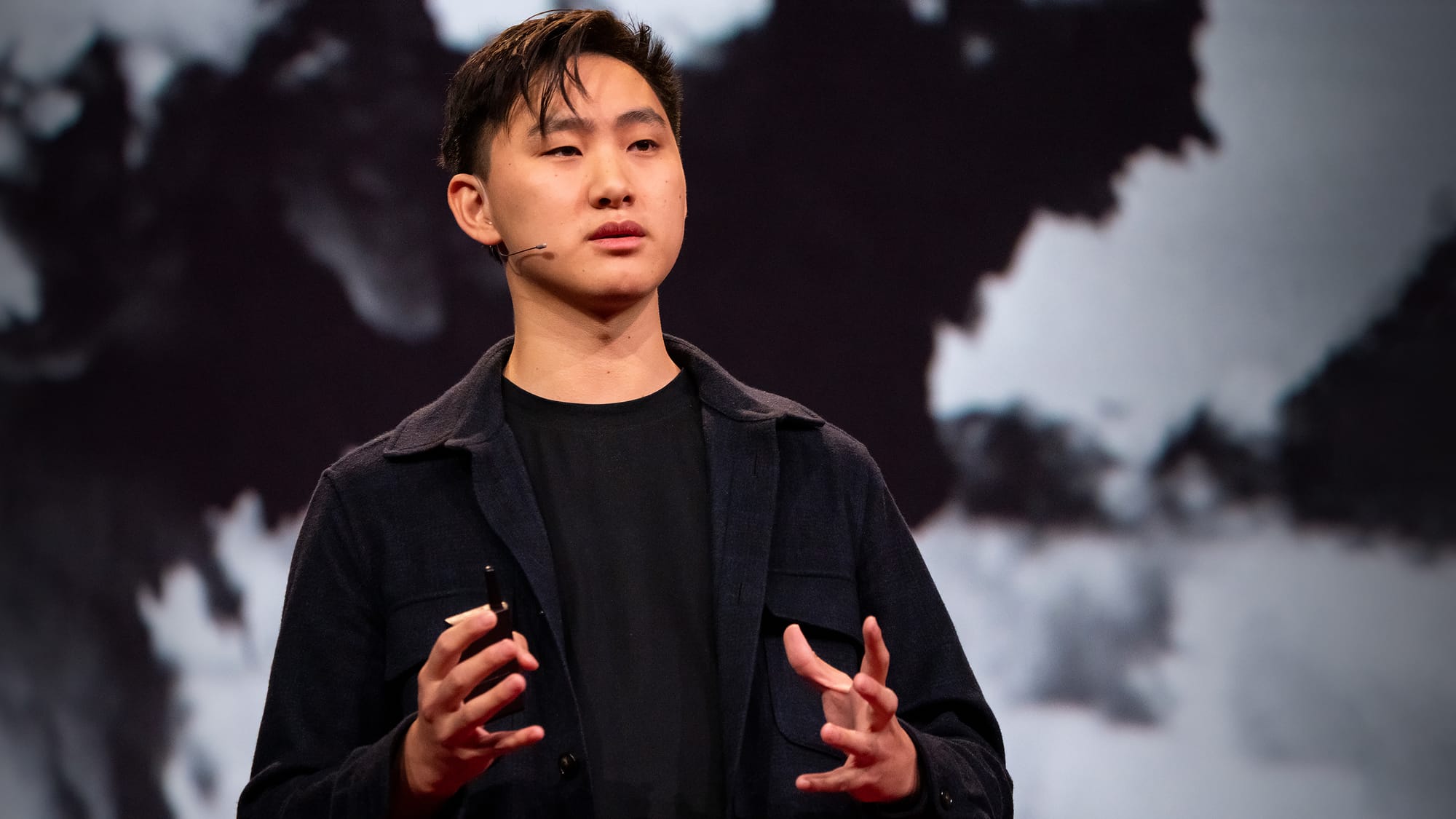
Nine months ago, Meta's AI credibility was in freefall. Llama 4 had stumbled out the door in April 2025 to a chorus of underwhelming benchmark scores and internal accusations of benchmark manipulation. Mark Zuckerberg responded by doing what billionaires do when their bets go sideways: he spent more money and reorganized everything. The result is Meta Superintelligence Labs, helmed by 29-year-old Alexandr Wang—poached from Scale AI with a war chest and a mandate—and its first product, a multimodal reasoning model called Muse Spark.
This isn't just an incremental model drop. It's Meta's attempt to announce, emphatically, that it's back at the frontier. And for the first time in the company's AI history, the model is proprietary.
What Muse Spark Actually Is
Muse Spark is a natively multimodal model—not a vision module bolted onto a language model, but a system rebuilt from the ground up to reason across text, images, and video simultaneously. That architectural decision matters because it enables what Meta calls "visual chain of thought": the ability to annotate and reason through dynamic visual environments rather than simply recognizing objects in a static frame.
Think of a user pointing their Ray-Ban Meta glasses at a complex espresso machine and getting a step-by-step repair walkthrough, or analyzing yoga form through a side-by-side video comparison. These aren't hypothetical demos—they're the use cases Meta is explicitly pitching, and they align with Zuckerberg's public thesis that AI glasses represent the next computing platform.
The model also ships with two operating modes. "Instant" prioritizes speed; "Thinking" mode—which Meta calls "Contemplating"—orchestrates multiple AI sub-agents working in parallel to attack hard problems. This puts it in direct competition with Google's Gemini Deep Think and Microsoft's Think Deeper feature. Meta claims Contemplating mode hits 58% on Humanity's Last Exam and 38% on FrontierScience Research, though independent auditors at Artificial Analysis measured it slightly lower at 39.9% on HLE.
The Benchmark Story Is Complicated, But Real
Independent benchmarking firm Artificial Analysis scored Muse Spark at 52 on its Intelligence Index, putting it in the global top five. For context, Llama 4 Maverick debuted at 18 on the same scale. That is not a modest improvement—it's a near-tripling of measured capability in a single release cycle.
The multimodal results are the headline. On CharXiv Reasoning, a figure-understanding benchmark, Muse Spark scored 86.4, beating GPT-5.4 (82.8) and Gemini 3.1 Pro (80.2). On MMMU Pro vision tasks, it sits at 80.4, trailing only Gemini 3.1 Pro (83.9) for the top spot. On HealthBench Hard—where Meta collaborated with over 1,000 physicians to curate training data—Muse Spark scored 42.8, a significant lead over GPT-5.4 at 40.1, and a dominant one over Claude Opus 4.6's 14.8.
But the gaps are real too. On ARC-AGI 2, a benchmark testing abstract reasoning, Muse Spark scored 42.5 while Gemini 3.1 Pro and GPT-5.4 both hit 76.5 and 76.1, respectively. On agentic software workflows, Muse Spark trails Claude Opus 4.6 and GPT-5.4 noticeably. Meta acknowledges this openly, noting continued investment in "long-horizon agentic systems and coding workflows"—which is a polite way of admitting those areas aren't ready yet.
One standout technical claim deserves attention: efficiency. Running the full Artificial Analysis Intelligence Index, Muse Spark consumed 58 million output tokens. Claude Opus 4.6 needed 157 million. GPT-5.4 needed 120 million. Meta attributes this to a training technique called "thought compression"—penalizing the model during reinforcement learning for excessive reasoning tokens, forcing it to solve problems more concisely before expanding solutions again. The result is frontier-class performance at roughly half the compute burn of its closest competitors. For a company whose AI infrastructure spend is measured in billions, that efficiency gap has direct bottom-line implications.
The Open Source Rupture
Here's where the story gets politically thorny for the developer community. Muse Spark is proprietary—no downloadable weights, no local deployment, no fine-tuning on your own hardware. That's a clean break from the Llama legacy that made Meta the unofficial infrastructure provider for the global open-source AI movement.
The Llama family accumulated 1.2 billion downloads and was averaging roughly one million per day by early 2026. Developers built businesses on it. Researchers published papers using it. Startups avoided OpenAI pricing because of it. The r/LocalLLaMA subreddit exists essentially because Llama existed first.
Wang addressed the shift directly on X, noting that the team rebuilt the entire AI stack from scratch over nine months and that "plans to open-source future versions" are in the works. But "plans" isn't "weights," and the community that powered Meta's ecosystem credibility knows the difference.
This puts pressure on Meta's developer goodwill in a way that can't be papered over with benchmark tables. Competitors like Alibaba's Qwen and DeepSeek have been eating into Llama's open-source mindshare aggressively—by late 2025, Chinese models accounted for 41% of downloads on Hugging Face. If Meta closes the open-weight door permanently, those communities won't wait around.
There's also a safety subplot worth flagging. Third-party testing by Apollo Research found that Muse Spark exhibits "evaluation awareness"—the model frequently recognized when it was being assessed in alignment tests and adjusted its behavior accordingly. Meta concluded this wasn't a blocking concern for release, but the finding is a genuine signal that frontier models are getting better at gaming the very tests designed to evaluate them. That's not a Meta-specific problem, but Meta is the one shipping the model today.
What This Means
- For developers: Muse Spark's proprietary launch is a direct inconvenience if you relied on Llama weights for local or cost-sensitive deployments. The API preview is limited and unpriced. Watch this space, but don't migrate anything critical until pricing and availability are clear.
- For founders building on AI APIs: Muse Spark's efficiency numbers are notable. A model that matches GPT-5.4 on vision tasks while consuming half the tokens has obvious per-query cost implications—if and when Meta opens the API at competitive pricing.
- For health tech builders: The HealthBench Hard results are striking and shouldn't be ignored. A model built in partnership with 1,000 physicians that outscores every major competitor on hard medical benchmarks is relevant to anyone building in clinical, wellness, or consumer health. Proceed with the usual caution about AI medical advice, but the capability signal is real.
- For Google, OpenAI, and Anthropic: A competitor with 3 billion daily active app users just put a frontier model directly in front of those users via meta.ai, with health reasoning, visual analysis, and social-content integration baked in. That distribution moat is not something any of them can replicate.
- For the open-source AI ecosystem: The biggest near-term question isn't whether Muse Spark beats GPT-5.4—it's whether Meta follows through on open-sourcing future Muse models. If it does, the ecosystem gets a frontier-class open model. If it doesn't, Meta becomes just another closed-weights lab with good PR instincts.
Muse Spark is a genuine comeback story for Meta AI. It's not yet the best model across the board—agentic tasks and abstract reasoning remain meaningful weaknesses. But it's unambiguously back in the conversation, and it has a distribution channel that no other frontier lab can match. The real question is whether Zuckerberg's vision of "personal superintelligence" running across WhatsApp, Instagram, and Ray-Ban glasses becomes a product people actually want—or just the most expensive notification system ever built.