
The Cameras Don't Lie — But They Can't Capture Everything
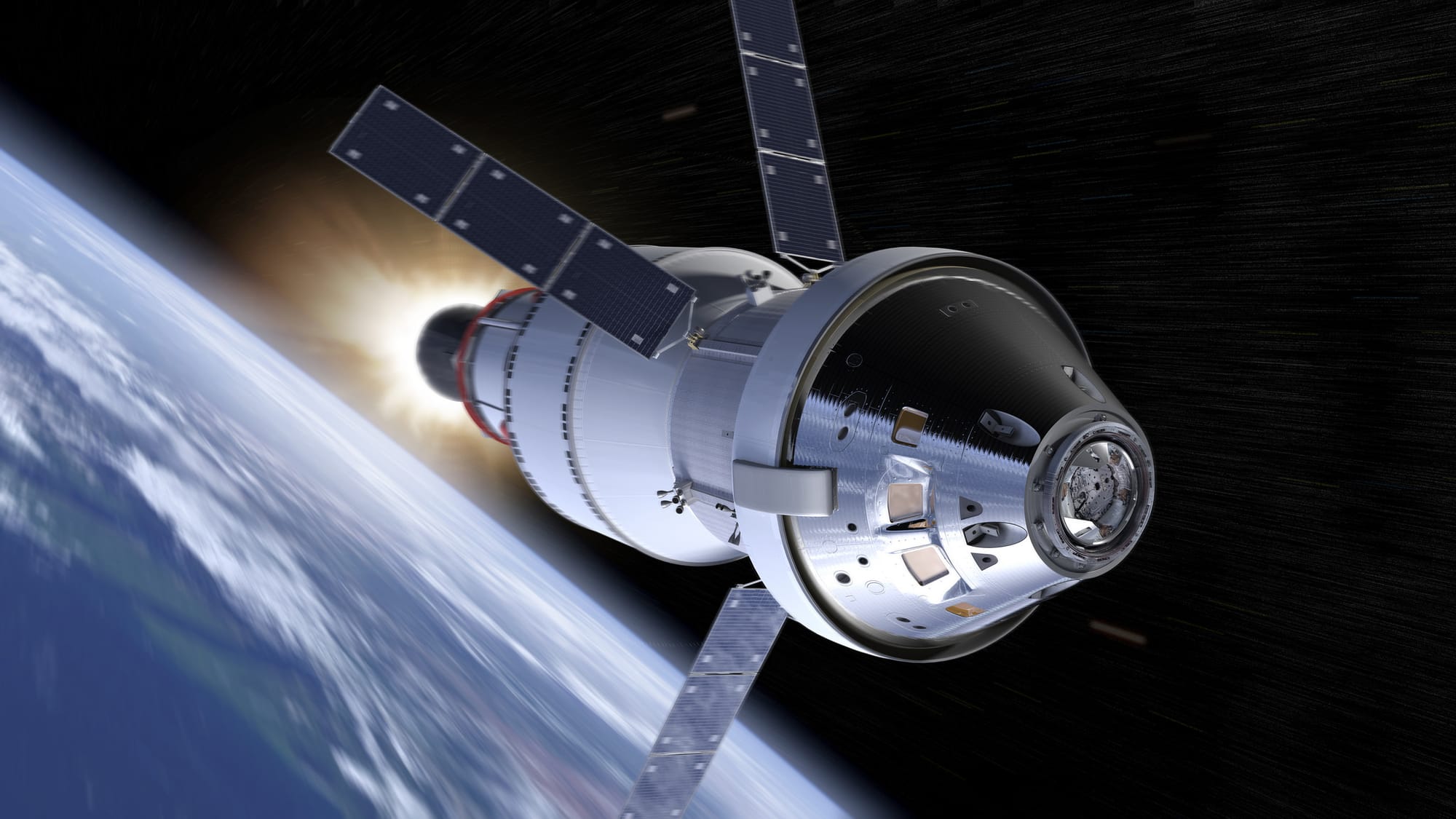
When Victor Glover, pilot of the Orion spacecraft Integrity, tried to describe what the crew was seeing during their lunar flyby, he landed on the most honest assessment a trained astronaut can give: the cameras weren't keeping up.
What we're seeing, we're just not picking up on the cameras. After all the amazing sights that we saw earlier, we just went sci-fi. It just looks unreal.
— Victor Glover, Pilot, Artemis II
That confession is, paradoxically, one of the most compelling arguments for sending humans to the Moon in the first place. After more than five decades of robotic reconnaissance, Artemis II finally put four people — Commander Reid Wiseman, Pilot Victor Glover, Mission Specialist Christina Koch, and Mission Specialist Jeremy Hansen — within 4,067 miles of the lunar surface. And while the mission didn't land, the imagery it delivered is already rewriting what "stunning" means in the context of space photography.
NASA began uploading high-resolution images to Johnson Space Center's Flickr page after Orion established an optical communications link with ground stations on Monday night. These weren't screengrabbed video frames or compressed data bursts. They were deliberate, high-quality photographs taken with Nikon cameras fitted with wide-angle and telephoto lenses — plus iPhones pressed against the windows of Integrity for good measure. The result is the sharpest human-captured imagery of the Moon ever produced.
What Makes These Images Different
The Artemis II crew caught something rare: a solar eclipse as seen from lunar orbit. During totality, the cabin filled with a quality of light that no simulation or previous photographic record has replicated. The astronauts had to wear sunglasses during the initial phase. When totality hit, they were watching Earth vanish behind the Sun from a vantage point no human had occupied in 53 years.
The Earthrise images from Apollo 8 are iconic precisely because they reframed humanity's sense of scale. These new photographs operate on a similar register — but with the resolution that modern optics and data pipelines make possible. The far side of the Moon, visible only in Earthshine during the eclipse phase, appeared in enough detail that surface features could be discerned. That alone is scientifically significant, since the far side has historically been the exclusive domain of robotic orbiters.
Each crew member took turns at the windows, documenting the view both for public audiences and for the lunar science community back at Mission Control in Houston — where geologists were, by all accounts, barely containing themselves.
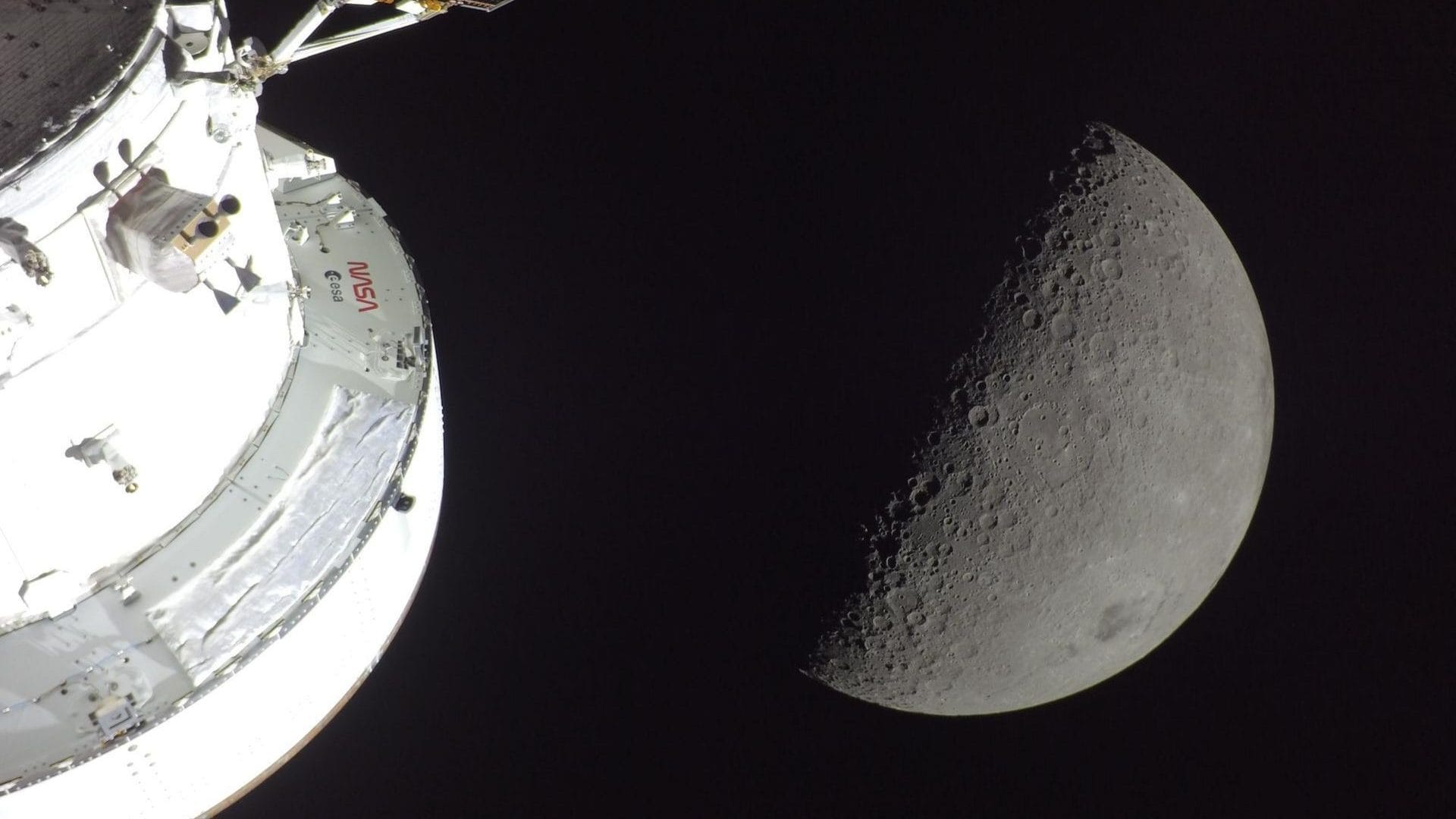
Yet the scientific yield of Artemis II exists in genuine tension with what robotic missions have already mapped in exhaustive detail. The Moon is already on Google Maps. Orbiters equipped with laser altimeters, radar systems, magnetometers, and multispectral sensors have been interrogating the lunar surface for decades. Their instruments don't blink, don't need sleep schedules, and don't require life support. They discovered water ice signatures at the south pole — which is, candidly, the most operationally important lunar finding of the last generation.
So what does a human eye add? The answer is less about raw data and more about integration. When Glover described seeing the Moon's surface illuminated by Earthshine with his own eyes, he was doing something no instrument package has managed: synthesizing the sensory gestalt of being there. Scientists in Houston were excited not just because the crew was capturing images, but because they were calling out observations in real time — shifting attention, noticing anomalies, reacting to context in ways that orbital cameras on preprogrammed tracks simply cannot.
The Uncomfortable Comparison
This puts pressure on NASA to articulate, clearly and soon, what human presence near the Moon accomplishes that a next-generation robotic mission cannot. The scientific community is not uniformly convinced, and the cost differential is not trivial. Artemis as a program has been expensive, delayed, and politically fraught. The imagery from this flyby is genuinely extraordinary — but extraordinary photography is not, on its own, a scientific justification for the price tag.
The more honest argument is that Artemis II is a capability demonstration. The mission proved that Orion and Integrity can carry a crew to lunar distance and back safely. It validated life support systems, communications infrastructure including the optical data link, and crew operational protocols. The stunning images are a byproduct of that validation, not its purpose. Framing them as the mission's primary output undersells what actually happened — and oversells what one crewed flyby can contribute to lunar science relative to a decade of robotic observation.
The crew is currently accelerating back toward Earth for reentry and splashdown off the California coast on Friday evening, closing out the first crewed lunar mission since the final Apollo flights.
What This Means
The real significance of Artemis II is architectural, not photographic. The images are the headline, but the infrastructure is the story.
- For developers and engineers: The optical communications link that streamed high-resolution imagery from lunar distance is the same technology that will eventually support real-time data transfer from lunar surface operations. That's a foundational capability, not a parlor trick.
- For founders in the space sector: Artemis II validates the demand signal for human-rated systems beyond low Earth orbit. If you're building for cislunar infrastructure — power, communications, logistics — the political and operational case just got stronger.
- For the scientific community: The tension between robotic efficiency and human adaptability isn't resolved by this mission, but it's productively sharpened. The next argument will need to be about surface science, not flyby photography.
- For the broader public: These images matter because they shift the psychological frame. Earthrise from Apollo 8 changed how a generation thought about the planet. The Artemis II photographs, taken with modern optics under an eclipse that no camera had ever captured from that angle, have the same potential — if NASA and its partners are smart enough to let them breathe.
The Moon hasn't changed. Our proximity to returning to its surface has.