
The Move
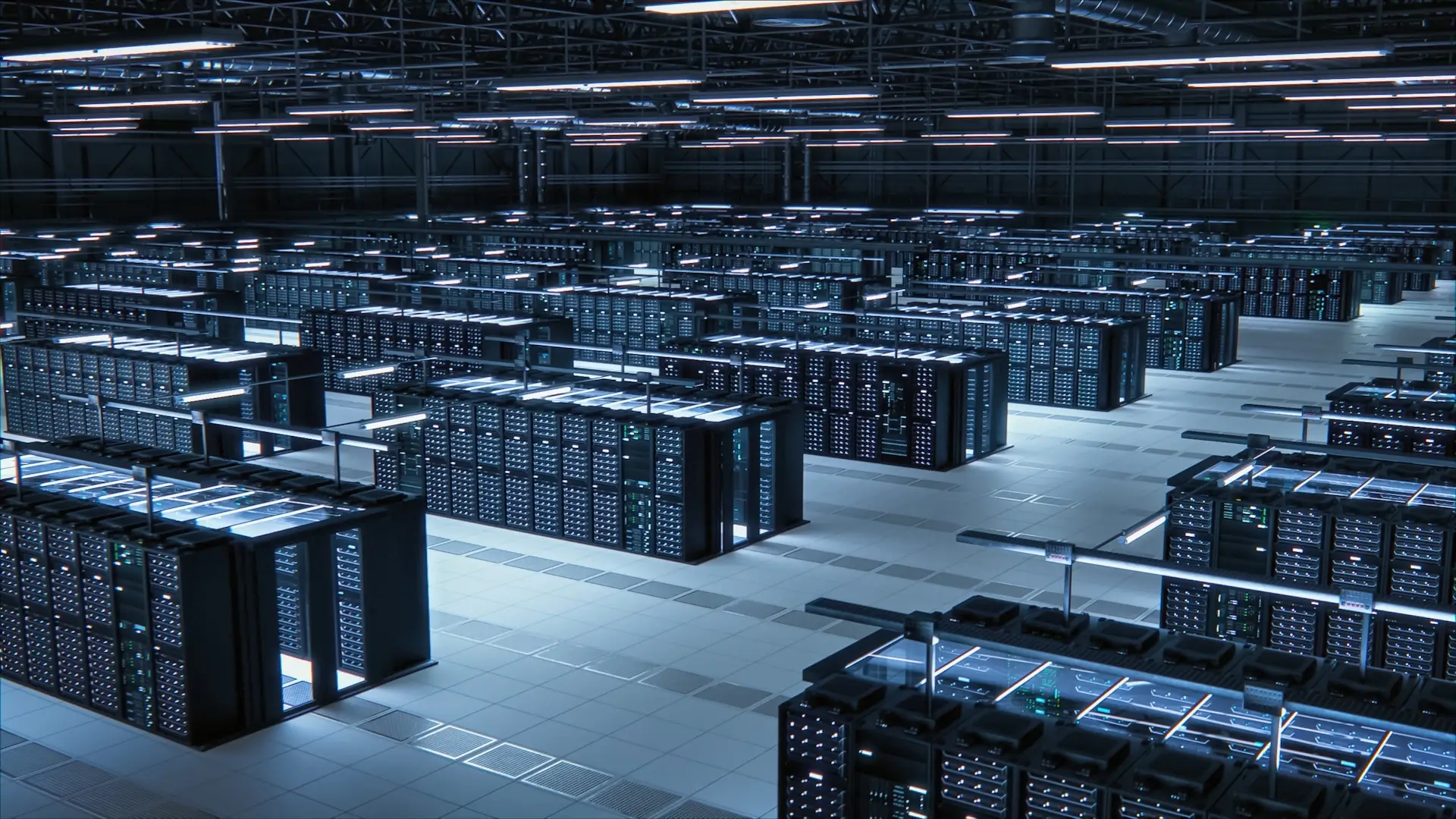
Progressive lawmakers Bernie Sanders and Alexandria Ocasio-Cortez are pushing for a federal moratorium on the construction or upgrading of AI data centers that draw more than 20 megawatts of peak power. Sanders is introducing the bill in the Senate; Ocasio-Cortez will follow with companion legislation in the House.
The moratorium has no fixed end date. It lifts only once Congress passes laws that satisfy a sweeping set of conditions: limiting data centers' environmental footprint, shielding communities from electricity rate hikes, preventing AI-driven job displacement, ensuring AI-generated wealth is broadly shared, and establishing federal review of AI models before they ship.
For good measure, the bill also bans exports of advanced computing hardware — GPUs, AI accelerators — to any country that hasn't enacted equivalent protections. At this point, that means nearly every country on Earth.
Why Now
The timing isn't random. The AI infrastructure buildout has quietly become one of the most politically toxic developments in American energy politics. One Bloomberg analysis found that power costs in regions with the highest data center concentration have surged by as much as 267% over five years. A December report from the Center for Biological Diversity projected that if current trends continue, data centers could account for nearly half of all US power-sector emissions that national climate targets allow.
Community pushback has already been biting into the industry's plans. According to figures cited in the bill's drafting process, around $98 billion in data center projects were stalled or canceled due to local opposition in just the second quarter of 2025. More than a dozen states — Georgia, Virginia, New York, Minnesota, and others — have introduced their own state-level moratorium bills this year.
Sanders first floated the idea of a federal moratorium back in December, framing it as a response to a letter signed by over 230 progressive advocacy groups. At the time, he acknowledged it would be seen as fringe. The fact that it's now formal legislation with a House companion suggests the political calculus has shifted.
The Public Mood Is Their Tailwind
The bill's sponsors aren't operating in a vacuum. A Pew Research poll found that a majority of Americans are more concerned than excited about AI — with only 10% saying their excitement outweighs concern. Separate polling shows about 40% of Americans believe data centers are bad for the environment and home energy costs, while 30% say they negatively affect quality of life for nearby residents.
On the labor front, Ocasio-Cortez cited more than 54,000 AI-related layoffs in the US in 2024 alone. Sanders invoked mental health, online privacy, and the long-term existential risk that leading AI researchers have flagged — including the possibility of systems that "surpass human intelligence and operate independently, beyond our control."
Notably, the bill leans into quotes from AI's own architects. Sanders' office cites Elon Musk, Google DeepMind's Demis Hassabis, Anthropic's Dario Amodei, Sam Altman, and Nobel laureate Geoffrey Hinton — all of whom have publicly warned about the dangers of unchecked AI development. The implicit argument: if the people building this technology are sounding alarms, maybe the government should listen.
What the Industry Says
The Data Center Coalition fired back quickly, warning that a moratorium would "limit internet capacity, slow critical services, eliminate hundreds of thousands of high-wage jobs, drain billions in local tax revenue, and raise costs for American families." The industry's position frames itself as the responsible party, committed to "working with communities" while continuing to build.
The Trump administration has been unambiguous in its support for AI expansion. In March, the White House hosted executives from Amazon, Microsoft, Meta, and Google to sign a nonbinding pledge to shield consumers from rate hikes caused by data center energy demand. Experts widely described the agreement as symbolic. Trump himself acknowledged the industry's image problem: "Data centers... they need some PR help."
That context matters. This bill is not going to pass the current Senate. The political math — a Republican majority, a White House deep in AI boosterism, and hundreds of millions in tech industry lobbying — makes passage essentially impossible in the near term.
What This Means
This legislation matters less as a near-term policy outcome and more as a political and regulatory signal.
- For AI developers and infrastructure teams: The regulatory environment for data center deployment is becoming more hostile at every level — local, state, and now federal. Projects that assume smooth permitting and stable energy costs need to build in more risk. The moratorium pressure isn't going away even if this specific bill dies.
- For AI companies: The use of their own executives' safety warnings against them is a new rhetorical move. If Altman and Amodei have publicly said AI poses serious risks, the political argument for regulatory oversight becomes harder to deflect.
- For investors: The $98 billion in already-stalled projects underscores real execution risk in the data center buildout. Bipartisan unease — even DeSantis has made critical noise about data center energy impacts — means this isn't a purely progressive issue anymore.
- For policymakers globally: The chip export provision, which effectively conditions hardware sales on recipients having AI safety laws, is a significant escalation. Enacted, it would reshape the entire global AI supply chain.
The bill's passage of the 20 MW threshold as the definitional line is also worth noting for developers: it's a technically specific number that captures hyperscale facilities (your average large AWS or Google data center) while nominally leaving smaller infrastructure untouched. That specificity signals the bill was drafted with real policy intent, not just as a press release.
Sanders himself framed the moment starkly: "I fear that Congress is totally unprepared for the magnitude of the changes that are already taking place." Whether you agree with the moratorium approach or not, that concern is one the tech industry can no longer simply dismiss as fringe.