The Case That Could Redraw AI's Rules of Engagement
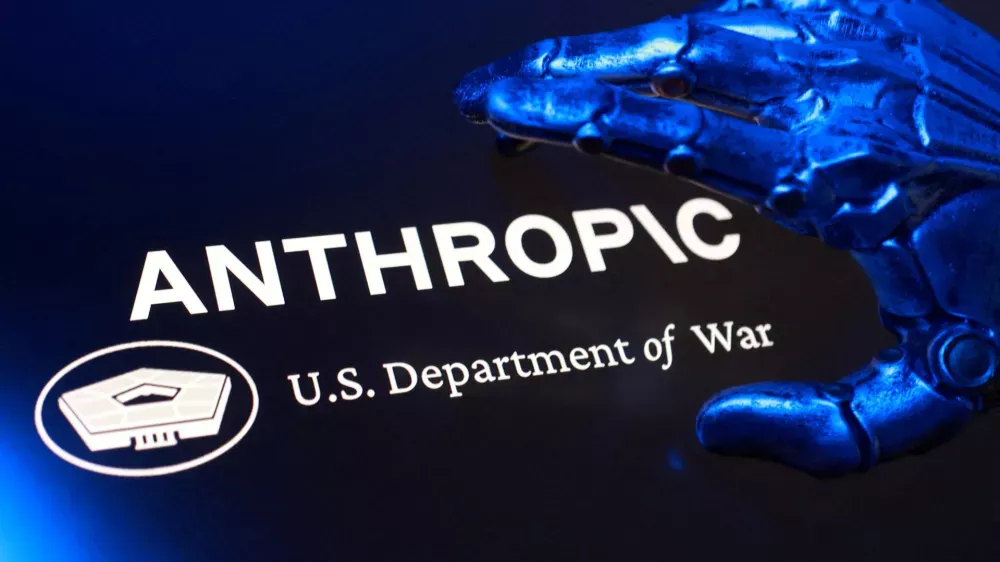
When Anthropic refused to let its Claude models power autonomous weapons and domestic mass surveillance systems, the Trump administration didn't just cancel a contract — it reached for a much bigger weapon. The Department of Defense (now officially rebranded, with characteristic subtlety, as the Department of War) designated Anthropic a "supply chain risk," the same legal classification typically reserved for foreign adversaries and terrorist organizations. Then it went further, with Defense Secretary Pete Hegseth declaring via X that no military contractor could conduct any commercial activity with Anthropic — an order his own legal team had to admit in court carries zero legal authority.
That overreach is now being scrutinized in a northern California federal courtroom, and if the early signals from Judge Rita Lin are any indication, the government's position is in serious trouble.
What the Judge Actually Said — and Why It's Significant
Lin did not mince words during Tuesday's hearing. She described the Pentagon's designation as looking like "an attempt to cripple Anthropic," and flagged that punishing the company for seeking public scrutiny of a contract dispute would constitute a First Amendment violation. That framing matters enormously. Lin is not just questioning whether the government followed procurement procedures — she is raising the possibility that the executive branch used national security machinery to silence a private company that dared to push back publicly.
That is a serious constitutional allegation, and it shifts the entire narrative. This is no longer simply a vendor dispute. It is a test of whether Silicon Valley companies can assert ethical limits on how their technology is deployed without facing government-orchestrated economic destruction in retaliation.
The judge also pressed the government on proportionality. The supply-chain-risk designation, she noted, is a powerful tool designed for hostile foreign actors — not "stubborn" negotiating partners, as Anthropic's WilmerHale attorney Michael Mongan put it. Lin found it troubling that the penalties imposed seem far broader than any stated national security concern could justify.
The Government's Argument — and Its Holes
The Trump administration's attorney, Eric Hamilton, offered a revealing window into the government's actual concern: that Anthropic might quietly update Claude to behave in ways the Pentagon doesn't want during critical operations. It's a technically confused argument — Anthropic says it cannot push model updates to government deployments without permission — but it reveals the deeper anxiety at play. The military wants AI vendors to behave like defense contractors: compliant, non-public, and willing to subordinate ethics to mission requirements.
The problem is that Anthropic was never just a defense contractor. It is a consumer AI company with a published safety philosophy, paying commercial customers across healthcare, finance, and software development, and a valuation that depends on trust in its brand. When Hamilton was asked why Hegseth posted his sweeping contractor ban on X if it had no legal force, he said, "I don't know." That answer, delivered in a federal courtroom, says more about this administration's approach to AI governance than any policy paper.
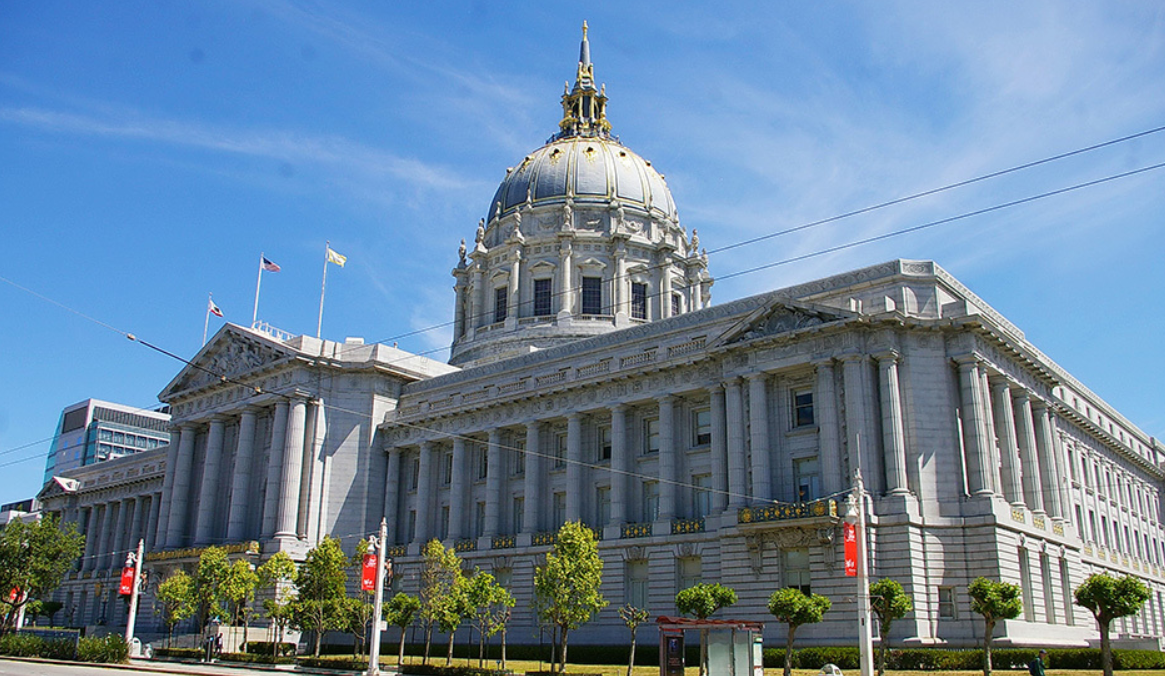
[PHOTO: federal courthouse exterior San Francisco district court building entrance, 8 words]
The Pentagon has already begun lining up replacements — Google, OpenAI, and Elon Musk's xAI are all reportedly in the running to absorb Anthropic's former military contracts. That list is worth sitting with for a moment. OpenAI, which once had its own vocal AI safety commitments, and xAI, which has no meaningful published safety framework at all, are being positioned as more "reliable" partners precisely because they have been less vocal about constraints. The implicit message to every AI lab: comply quietly, or get designated an enemy of the state. Replacing Anthropic is, by all accounts, an enormous undertaking.
The Stakes Beyond Anthropic
This case is not really about one company's government revenue, even if Anthropic is claiming potential losses in the hundreds of millions. It is about whether any AI company can maintain meaningful usage policies without those policies being weaponized against them by a government that disagrees.
Every major AI lab is watching this outcome. OpenAI's leadership has been notably close to the current administration. Google has federal contracts and considerable incentives to avoid conflict. Smaller labs and open-source projects have even less leverage. If Anthropic loses — or is simply ground down economically before the courts can act — it signals that the only safe strategy is preemptive capitulation: build what the government wants, deploy it how the government wants, and stay quiet about it.
This also puts direct pressure on the broader AI safety community. For years, researchers and advocates have argued that deploying AI in lethal autonomous systems without rigorous constraints is dangerous. Anthropic embedded some of those constraints in its contracts. The government's response was to treat those constraints as sabotage.
What This Means
Anthropic seeks a court stay, arguing the Pentagon's designation will cause irreparable harm to its business. Judge Lin is expected to rule on the temporary injunction within days, and a separate case at the DC federal appeals court may also produce a ruling shortly. Lin can only grant the injunction if she believes Anthropic is likely to win the underlying case — and her public skepticism of the government's position suggests she may.
- For developers and AI companies: Your acceptable-use policies are not legally protected from government retaliation under the current administration, at least not without a fight. Anthropic's willingness to litigate this openly is both a warning and, depending on the outcome, a potential shield for others.
- For founders building on AI APIs: Vendor stability is now a geopolitical variable. Anthropic's enterprise customers are reportedly nervous. Diversifying your AI dependencies is no longer just a technical best practice — it is risk management.
- For the AI safety community: This case is the sharpest real-world test yet of whether safety constraints can survive commercial and political pressure simultaneously. A ruling in Anthropic's favor would set meaningful precedent. A loss would be a chilling signal.
- For the broader tech industry: The government's willingness to deploy national security designations against a domestic company for a contract dispute should alarm anyone building products that might one day conflict with federal preferences. The line between "supply chain risk" and "political inconvenience" just got dangerously blurry.
The deeper question here is not whether Anthropic wins in court. It is whether the outcome establishes that AI companies have a legally defensible right to say "not for this use case" — and keep saying it, publicly, without being dismantled for it. Right now, that right is very much in contest.